Have a workout in a few hours and wondering what to eat before a workout? The right pre-workout meal can give you the energy you need without making you feel too full when you start your squats, run, or weight training.
There is no one ideal meal for everyone. What matters is when you eat, the duration and intensity of your workout, and what you can comfortably digest.
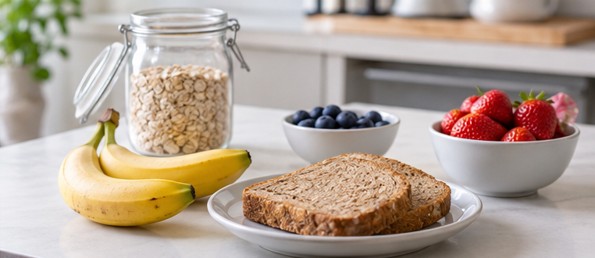
Pre-workout meal with oats, banana, berries, yogurt, and water.
1. Add Carbs to Your Pre-Workout Meal
Carbohydrates (carbs) are an important source of energy during exercise, especially as intensity and duration increase. Consuming carbs before a workout can help ensure you have energy available and support your performance.
Good options include:
- oats with banana,
- bread or toast,
- rice,
- fruit,
- cereal,
- yogurt with fruit and oats.
2. Combine Carbs and Protein
If you have enough time before your workout, a meal that combines carbohydrates and protein is a practical choice. Protein supports the maintenance and growth of muscle mass, while your overall daily intake matters more than any single protein shake.
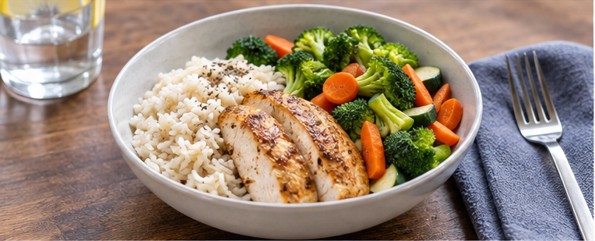
For example, you could choose rice with chicken, yogurt with oats and fruit, or a sandwich with bread and a lean source of protein.
3. Adjust Your Meal to the Time You Have
Meal timing can be particularly important for making sure you start your workout with enough energy without experiencing digestive discomfort.
- 3–4 hours before: you can have a regular, balanced meal.
- 1–3 hours before: opt for a smaller meal or snack.
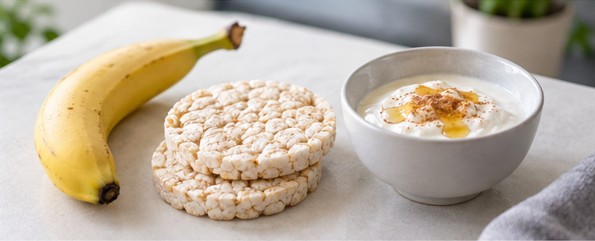
- 30–60 minutes before: keep it light, with easily digestible carbohydrates, such as a banana or a small serving of nuts.
Very large meals right before a workout can make you feel too full.
4. Don't Overdo Fat and Fiber
Healthy doesn’t necessarily mean ideal before every workout. A large meal high in fat or fiber takes longer to digest and may cause bloating or discomfort during exercise for some people.
The closer you are to your workout, the simpler and easier to digest your snack should generally be.
+1. Don't Forget to Hydrate
Your pre-workout routine isn’t just about food. Start your workout well hydrated and make sure you’re drinking water throughout the day. Inadequate hydration can affect both physical and mental performance.
For most typical workouts, water is enough. Sports drinks and additional carbohydrates become more relevant mainly during prolonged or particularly demanding workouts.
What to Avoid Before a Workout?
You don’t need a huge food blacklist. Before a workout, however, it’s generally best to avoid:
- very large meals shortly before you start,
- excessively high-fat options,
- large amounts of fiber if they cause you discomfort,
- new foods that you don’t know how your stomach will react to.
Frequently Asked Questions
What Should I Eat 30 Minutes Before a Workout?
Choose something small and easy to digest, with an emphasis on carbohydrates. A banana, a small serving of nuts, or a small fruit snack are practical options.
Can I Work Out on an Empty Stomach?
You can if you feel good doing so, but fasted workouts aren’t necessarily better for performance. During higher-intensity or longer workouts, consuming carbohydrates before exercise may help you maintain intensity more effectively.
Do I Need to Take a Pre-Workout Supplement?
No. A supplement isn’t necessary for a good workout. Focus first on your overall diet, hydration, sleep, and adequate energy intake.
Sources
Mayo Clinic (2023) Eating and exercise: 5 tips to maximize your workouts
Mayo Clinic – Eating and Exercise
Thomas, Erdman & Burke (2016) Nutrition and Athletic Performance – Academy of Nutrition and Dietetics, Dietitians of Canada & American College of Sports Medicine
PubMed – Nutrition and Athletic Performance
British Dietetic Association (2026) Sport and exercise nutrition
British Dietetic Association – Sport and Exercise Nutrition
Kerksick et al. (2017) International Society of Sports Nutrition Position Stand: Nutrient Timing
Journal of the International Society of Sports Nutrition – Nutrient Timing
Cleveland Clinic (2025) Sports Nutrition: How Important Is It?
Cleveland Clinic – Sports Nutrition